- The same imagery (avatar) is used to represent the band.
- This imagery often advertises what the band is trying to sell.
- Anything important (such as a new music video) is announced on all sites.
- Fans can interact personally and are encouraged to do so.
- The band doesn't respond on a personal level to their fans.
Showing posts with label Research. Show all posts
October 30, 2010
Comparison of Social Networking Sites - Green Day
October 18, 2010
Behind-The-Scenes Videos Analysis
Over the half-term, when we're filming the narrative part of our music video, it would also be a good idea to make a "Making of" or "Behind-the-scenes" video which we can place on our website as other artists have done in the past. A few of these videos are below:
By watching these, I have found 9 conventions to have in mind when I'm filming / editing our behind the scenes video.
- Feature the music of the music video
- Showcase how fun it was to make the video
- Usually about as long as a music video
- Edited in chronological order of filming
- All cast and crew acknowledge camera
- Focus on the artist or director
- Cutaways to what was being filmed
- Shows the process but doesn't explain
- Longer takes than a normal music video
October 11, 2010
Music Video Making Tips
From an article in "Media Magazine", I have found some great tips that I think we should remember when it for the planning, shooting and editing stages of transforming our idea into a music video:
- We need to plan a lot, especially since the narrative part of it takes place in many different locations with several actors. This means we have to design a schedule factoring in things like transport issues, setting up the camera / lighting and so on.
- As well as this, we should really need to make a call sheet with contact details, locations, etc. Hopefully between now and half-term, we'll have had enough meetings with our cast and crew to get all the information we need.
- We need to know what to film, after having another, more refined reccie this weekend in our 5 main locations, we should be able to write up a shot list with a few photographs / videos showing exactly where we want to film from.
- Around about the same time we're creating our schedule, we have to make a storyboard that clearly shows our actors and crew what we want to film. As we're filming outside, it will have to be durable and portable.
- Although, we have most of them, we'll have to secure all of our props and costumes prior to the shoot.
- By the shoot, we'll also have to find a way to playback the music on demand in a way that is loud enough for the performers to hear but also with the capability for it to play loud enough for the band to lip-sync to it without feeling embarrassed.
- Ensure the camera is set for the best video quality. This means using manual focus if necessary or a different white balance to give the video a sense of 'warmth'. Also, the ensure the depth of field / exposure are good then the aperture and shutter speed may need to be customised.
- Check the tape regularly to make sure the footage recorded properly and that nothing has to be shot again.
- Shooting more than you planned can be extremely useful for cutaways in the editing.
- When we finally capture the footage, we should split up the clips and name them to make it easier to work out where everything fits into the sequence.
- We need to plan which special effects we're going to use if any and not just add them to create the entire music video.
- Avoid long shots and cut a lot of times, this is also why we need to film a lot of different shots on the actual shoots.
- Work to ensure our material is lined up for lip synced before anything else, in our case, the narrative.
- Apply filters to make sure the footage looks consistent.
- Consider transitions, cuts are advisable but perhaps fades could be good at other parts in the sequence.
October 7, 2010
Website Notes
Although, we're not doing this until after half-term, I think we should think about our website, specifically how it should have the following:
- A theme (related to the album cover art running throughout on the background, icons, etc.
- Photographs and videos of the band such as the music video, behind the scenes, our competition, wallpapers, etc.
- One or more media players to show the videos or perhaps a slideshow of pictures.
- Opportunities for the audience to buy into the band such as a merchandise store or a link to their iTunes.
- Ways for the audience to communicate with the artist such as a comments section, social networking sites, e-mail button, forum and so on.
- Information about the band / individual band members (which would really work with our idea to give each member a different 'scene')
- Details of upcoming performances (at small gigs around London, e.g. Covent Garden, "Rough Trade")
October 3, 2010
Summary Of Album Art
The challenge of an album cover is that it has to do so much with such limited space:
- It has to stand out amongst other CDs.
- It has to be memorable.
- It has to suggest the genre of the music.
- It has to have an iconic and original image.
- It has to sell the artist behind the music.
- It has to have a constant concept running throughout.
- It has to instantly have an impact in the audience.
- There are many different features of album covers but the 8 most relevant ones are:
- A good album cover has the right combination of following and subverting conventions.
- Modern album covers may be 'post-modern' or have referential or ironic qualities.
- Some album covers attempt to shock or surprise the audience.
- They use colour and language to relate to everything mentioned previously.
- An artist's first album is typically named the artist.
- It may be useful to base the album cover on something else to link the two in the audience's mind.
- Elements of the album cover may suggest the theme of the album without illustrating it.
- Because of digital music consumption, it has to understandable when it is made smaller.
September 26, 2010
Marketing Case Study - Weezer
The point of a marketing campaign for an artist to generally maximise their income potential. This is because it creates an awareness of the artist / record label; helps to sell tracks, tickets and merchandise in general; to create the artist's brand identity; and gives audiences a preview of the band so that they want to buy into the band.
As Weezer is a signed and popular band, I believe there are 3 main sources of income that they get to fund their marketing campaigns:
Clearly, their genre of music and target audience is very relevant here. As an alternative rock band, they have a large audience of 13-24 year olds. As this audience frequently uses the internet for various reasons, they have a lot of online marketing such as internet adverts, the "YouTube invasion" and the media on the website. As an alternative band, a lot of their marketing has also been quirky, especially when you consider their album cover design:
As Weezer is a signed and popular band, I believe there are 3 main sources of income that they get to fund their marketing campaigns:
- Epitaph Records: their record label should give them large advances based on their popularity and therefore, their income potential which should be boosted by a marketing campaign.
- The Memories Tour and other live performances: since the rise in streaming and downloading music for free; there has been a decline in track sales; consequently a larger percentage of income has come from ticket sales from fans who would rather pay for that than an album.
- Endorsement: in most photographs I found of the band, I discovered that they get given customised instruments (such as the one pictured above) to play. Additionally, they have formed partnerships with other companies such as YouTube (where they post their videos) and Bravado (who creates their merchandise).
- The band has the usual features of a modern music marketing campaign; music videos, album cover, website, updates on social networking sites, radio play (on BBC 6 Music), merchandise, live performances, reviews, etc.
- What makes Weezer's marketing campaign unique is their "YouTube Invasion". Recently, they worked with 15 different popular YouTube videomakers to create 15 videos featuring the original artist and the band.
- Below is just one of their collaborations, this one with "The Key Of Awesome"; a 'show' that produces comedic music videos weekly.
- This campaign allows the band to have a good marketing mix: they reach a large international audience but also narrowcast to fans of those paticular shows.
Clearly, their genre of music and target audience is very relevant here. As an alternative rock band, they have a large audience of 13-24 year olds. As this audience frequently uses the internet for various reasons, they have a lot of online marketing such as internet adverts, the "YouTube invasion" and the media on the website. As an alternative band, a lot of their marketing has also been quirky, especially when you consider their album cover design:
| Jorge Garcia (AKA Hurley from "Lost") is the main image on the album cover, "Hurley" |
Website Case Study - Weezer
On September 14th, Weezer released there latest album, "Hurley".
There are currently under the Epitaph Records label. They are an independent record label who are currently behind artists such as Alkaline Trio, Off with Their Heads and New Found Glory. This shows that Weezer is with a record label that works specifically with pop punk / alternative rock artists which both reflect their genre of music but also creates opportunities for them to collaborate together.
The website benefits the band in several ways but the five most important ways are:
- It raises awareness of Weezer and "Hurley"
- It promotes the band's upcoming tour and other live performances.
- It constructs the artist's brand identity.
- It appeals to the target audience.
- It provides a platform for them to sell their music and more.
On the website, there are many signifiers concerning the way in which Weezer brands themselves. As they are an alternative rock band, they have gone against the convention of showing themselves, the main imagery is that of Jorge Garcia (Hurley from "Lost"). The band is also trying to brand themselves as being very friendly by showing fun candid shots of themselves and allowing their target audience to engage with them and other fans on a higher level.
From four different sources, I believe I can say who is Weezer's target audience:
- Google Trends - The USA and Canada are looking up Weezer the most which suggests they have more fans in those regions.
- YouTube - From the official video for "Memories" from "Hurley", it confirms that they are targeting an North American / Canadian audience (see below - darker regions are more popular). Additionally, it shows that their audience is mixed gender although mostly male and that they are popular with 13-24 year olds.
- Social Networking Sites - From looking at the band's Facebook likers, Twitter followers and Myspace friends, I see that this confirms what I thought about their audience's age and nationality although it seems there seems to be more gender balance here.
- Members of Weezer.com - Here, I see that their target audience is definitely composed of 13-24 year olds however they seem to be a lot more popular in America than Canada. This may be because they are only touring in the USA right now.
| Where to people who watch "Memories" come from, where darker areas indicate more popularity. |
To appeal to their young target audience, they do many small things but the main thing is that they allow the audience to interact in these 8 particular ways.
- The website actively encourages that fans sign-up (banner at top says "Sign Up" / "Sign In"; banners on the side of the page say the same;
- People who sign up can create their own page with status updates, information, etc.
- Additionally, they can communicate with other fans through the website's forum or use the chat option to talk to people in real time.
- Anybody signed up can upload pictures or videos relating to Weezer (taken at concerts, fan art, themselves wearing the band's merchandise, etc.)
- Visitors of the site can add the band on Twitter, Facebook, Myspace, YouTube or through RSS feed. Also, all of the band members have a Twitter or Myspace.
- Anybody who visits the site can listen to their latest single and watch videos / view pictures.
- Anybody can buy tickets for the band's tours, performances, festivals, etc.
- They can buy merchandise from the site's store such as the usual t-shirts, CDs and posters but one unique thing to Weezer is that you can buy a Snuggie because of the popularity these received on the internet (around about the same time they had a success with their viral hit, "Pork and Beans")
| The Weezer Snuggie |
Besides the methods previously mentioned, the band and album are marketed with adverts such as the large banner across the top of the page and a few on the sides; people can embed badges (see below) into blogs, signatures, etc.
Apart from the artist and their products not much else is being publicised on the website. A few exceptions are:
- The band's "unofficial fifth member" / their webmaster, Karl Koch
- The venues of their performances
- Other similar artists on the embeddable 'radio' (see below)
In terms of reaching their target audience, many things are important however, the top NUMBER are:
- The internet. Not just because of their website, but also through social networking sites that their audience uses and the fact that they gathered a significant internet following after their single "Pork and Beans" went viral on YouTube.
- The charts. Based on information on Google Trends, they were most popular in the second quarter of 2005. This is because of their album, "Make Believe" which peaked at #2 in the USA and #1 in Canada.
- Other artists. By looking up information about other similar artists such as The All-American Rejects, Deftones and Dashboard Confessional, I have found that they all cite Weezer as an influence to their music. Additionally, Weezer has has live performances with many popular artists in the past including Blink-182, Klaxons and Foo-Fighters.
- Music television. Although I think that this is due to Spike Jonze's popularity, Weezer has had several music videos with a lot of play on music television channels (even today). These include "Buddy Holly", "Undone - The Sweater Song" and "Island in the Sun".
September 25, 2010
Directorial Style - Michel Gondry
One of my favourite directors, even before I started this project has been Michel Gondry. After watching most of his music videos, I have chosen six very different videos that I both really like and think epitomise his style.
From left to right, top to bottom, these are music videos for:
"Mad World" - Gary Jules
"Let Forever Be" - The Chemical Brothers
"Walkie Talkie Man" - Steriogram
"Knives Out" - Radiohead
"The Hardest Button to Button" - The White Stripes
"Around the World" - Daft Punk
From watching these and more videos from Gondry, I believe I have found some similarities that create his overall directorial style.
- Use of stop-motion, often with live-action people.
- Movements and editing put heavy emphasis on the beat of the music as opposed to the lyrics.
- Videos based around a surreal concept and sometimes performance.
- Very abstract use of mise en scène.
- Fond of long takes.
- Frequently set in familiar locations but with an unusual twist.
- Often manipulates time in editing.
- Usually require a lot of choreography and planning.
In our project, I would really like to incorporate some similar elements although I appreciate that we can't recreate any of his work.
September 17, 2010
Vernallis Analysis - Daft Punk Is Playing At My House
Daft Punk Is Playing At My House - LCD Soundsystem
This music video applies very well to all four aspects of Carol Vernallis' theory.
Narrative
The narrative is very fragmented, by what I can gather, the narrative is that there is a very good DJ (not necessarily Daft Punk) performing for a party at somebody's house. This video is also very fragmented as it keeps changing location between the city streets and the house. Also, this video utilises a lot of interesting visual effects like stop motion and slow shutter speeds to create more distortion of narrative.
What drives the video forward is the music and the performance of the artist / host of the party, the partygoers and the 'traffic light people' act around the music (see Diegesis for more detail). The video's ending doesn't really resolve itself. All we know is that the party is now over, the 'traffic light people' take the
host outside and then it ends.
This one music video poses a lot of questions that it doesn't even begin to answer, including:
- Who are the 'traffic light people'?
- What is happening at the party?
- Why does the host keep going out into the city?
Editing
In this music video, most of the editing is done to match the music. The actual cuts between set-ups are matched to the lyrics. Although this may fall under Camera, a lot of the camera movements have been sped up to match the beat of the music. Additionally, a lot of the stop-motion with the 'traffic light people' also matches the music in the same way as the lights on the mixing desk.
Although a lot of music videos have obvious editing because of their lack of continuity, this one in paticular foregrounds the editing by using a range of visual effects such as stop-motion, speeding up footage and adding motion blur.
As mentioned before, this video breaks many of the rules of continuity:
- There are many jump cuts that break the 30 degree rule.
- Occasionally, there are cuts in the middle of lyrics.
- Extreme jumps in space are common in this video.
- Transitions are not smooth.
- Extreme shots are juxtaposed.
Camera
For this paticular aspect, Vernallis' theory is very applicable in three ways:
1. Extreme close-ups and master shots are both common in the video.
2. The camera moves in time with the music throughout the video. For example, at the beginning, the camera pans across a city, stopping on the beat.
3. The fast-paced and rough style of movement is distinctive to this video.
Diegesis
The world of the music video is revealed relatively slowly by showing various shots taken around an urban environment. Actions are very broken up by the blurry camera-work but they are also interrupted by cutting to other actions. Most movements of the people in the video are done to the music, especially those of the 'traffic light people'.
As previously mentioned, there are frequent jumps in space and time which create gaps in the audience's understanding. For example, the beginning jumps from the mixing desk inside the house to a city street at night to a set of traffic lights back to the city street to a building under construction to the traffic lights again and so on.
Some frames are emphasised by the movement stopping whilst the ones around it are blurry, e.g. when the party guests stop dancing. Throughout the video, there are repititions of the beat, lyrics and performance but more unique to this video, the colours of red, yellow and green are repeated.
As previously mentioned, there are frequent jumps in space and time which create gaps in the audience's understanding. For example, the beginning jumps from the mixing desk inside the house to a city street at night to a set of traffic lights back to the city street to a building under construction to the traffic lights again and so on.
Some frames are emphasised by the movement stopping whilst the ones around it are blurry, e.g. when the party guests stop dancing. Throughout the video, there are repititions of the beat, lyrics and performance but more unique to this video, the colours of red, yellow and green are repeated.
September 16, 2010
Goodwin Analysis - Never Miss A Beat
Never Miss A Beat - Kaiser Chiefs
Video directed by Goodtimes
This music video from the Kaiser Chiefs uses a track of indie-rock genre as shown by:
- Band wearing ordinary clothes
- Filmed on location as opposed to a studio
- Extras don't appear to wearing costumes (besides masks)
- Overall production value looks low
- The way the band performs the song
A few times in the video, the lyrics are illustrated by the visuals, for example:
- During the line, "Television's on the blink...", the visuals are of a malfunctioning television.
- At the beginning of the line, "Here comes the referee..." referring a to policeman, we see one on screen.
In the music video, most of the cuts are done to the beat, especially on each line of the lyrics. As the beat changes (during the chorus), the pace of the cuts changes accordingly to match the new beat.
Although no members of the Kaiser Chiefs have a solo in this song, when only the guitar and drums are playing, there are two short shots of them being played in rapid succession (see below).
I believe that the record company is trying to sell this track by appealing to a large audience with an almost tongue-in-cheek video. They are also trying to appeal to fans because the Kaiser Chiefs do not have too much presence in it and most people would probably not be aware of who they were unless they had heard their music before.
The band is being shown as being very proud of their British identity as they include certain distinctly British imagery such as:
- They perform in a pub
- There are several council estates in the video (in Thamesmead)
- The police officer is wearing a traditional British uniform
This video is like their other videos in that, they're all very different to each other. The only similarities I could find were the fact that it features the band and that they present themselves as an indie band (with ordinary clothing, etc.). Consequently, I think this represents a change in the band's image to more of a optimistic, feelgood style.
On several occasions, this music video makes references to looking, as in:
- In the video, many people watch the gangs as they run through the streets.
- There is a television screen which the band frequently watch in the first half of the video
- There is one part of the video with close-ups on the band members' eyes turning to look at something editing together very quickly.
This music video makes intertextual references to the news by having the lead singer on television as a presenter for the fictional "LS" news channel. This is because of themes raised in the lyrics about anti-social behaviour that was frequently discussed on the news in 2008.
This video is predominantly based around the narrative that various gangs are taking over the city however there are elements of performance at the end of the music video when the Kaiser Chiefs performing the last choruses and the gangs perform a dance routine.
September 14, 2010
Genre Signifiers - Dani California
The track "Dani California" by Red Hot Chilli Peppers plays around with the idea of genre signifiers by recreating iconic styles from previous decades. The following image is numbered 1 to 9, going from left to right, top to bottom based on when they appear in the music video.

- Rockabilly: Appearance of poor quality black and white film. Large hair with sideburns. Wearing black and long white jackets, black trousers and black shoes. Large record and curtains make up set. Gyrating hips and bending knees in a similar way to Elvis.
- British Invasion: Black and white film. Black drainpipe trousers. Narrow black tie. Mop-top hair styles. Thick-rimmed glasses. Formal suits. Very little controlled movement on the spot.
- Psychedelic Rock: Rainbow colours and paisley designs on shirts. Colourful, swirly, trippy background. Coloured, corduroy trousers. Long curly hair. Use of electric guitars. Wearing fur.
- 70s Funk: Large and bold glasses. Over-the-top costumes including fur jackets and metallic, embellished tops. Sparkling background and use of smoke. Use of UFO prop and space background. Kaleidoscopic visual effects.
- Glam Rock: Very bright, colourful and outrageous costumes that shine / have glitter. Camp gestures and dancing. Heavy lipstick and eyeliner. Platform-soled boots. Bright colourful studio lights. Pink set background.
- Punk Rock: Set seems very low budget (seemingly DIY). Union Jack hung up in background. Looks liked it's been filmed on poor quality tape (grainy, occasionally overexposed and black and white). Aggressive, in-your-face gestures. Very fast camera movements and editing. Use of tilt angles, jump cuts and soft focus.
- Gothic Rock: Black costumes with metal spikes. White and black make-up. Black tattoos. Drums more in foreground for emphasis. Very dark studio with smoke to look like they're performing on stage. Long straightened / gelled down hair. Sharp-edged black guitar.
- Glam Metal: Long dyed hair and hairbands. Uses similar lipstick and eyeliner to glam rock. More emphasis on playing drums and guitars. Spotlights on musicians. Skin-tight leather pants. Crop t-shirts and colourful scarves. Use of wide-angle lenses.
- Grunge: Very slow handheld camera work. Dark open studio. Artistic, shallow depth of field. Looks like only candlelight. Seemingly low budget. Ordinary, non-designer clothing. Muted-colour tops and jeans. Slow gestures.
September 13, 2010
Album Cover Deconstruction - Off With Their Heads
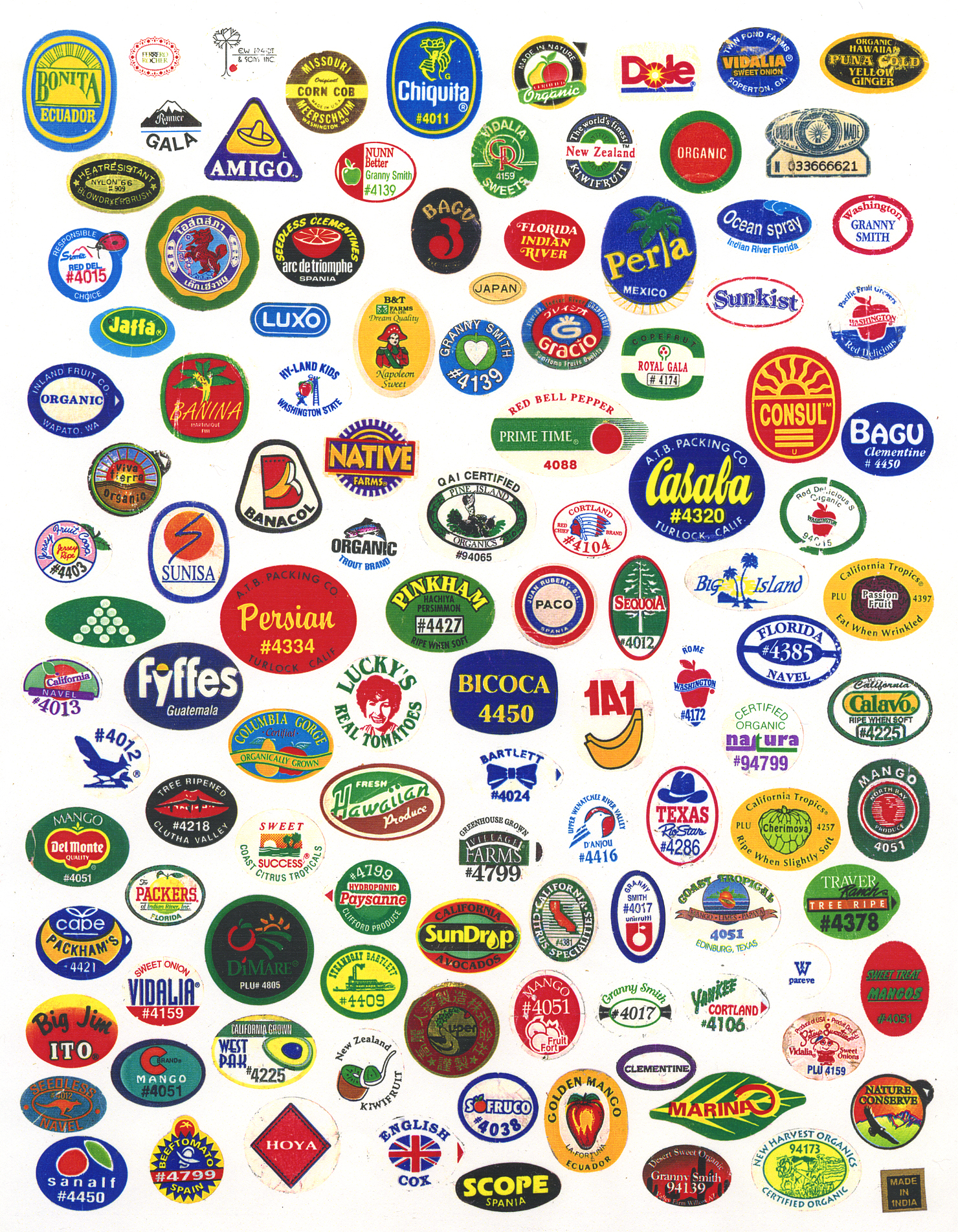
This album cover mainly consists of imagery based around the design of fruit stickers.- Front features the artist's name at the top in bold capital letters to draw attention to it first to appeal to fans of the band.
- Printed to look like it's on paper to make it seem of poorer quality for an indie look.
- Font is slightly 'destroyed' for the same effect.
- Main image is designed to be like a fruit sticker (see above) to remind audience of the past when these used to be placed on more fruit.
- Imagery of fruit stickers reflects the band's British identity.
- The back is still printed to look like paper and is seamless to the front because the spine has a similar design.
- The back is covered with fruit sticker inspired designs for each track on album. Each sticker has the track name, "Kaiser Chiefs" and the track number all integrated subtly.
- Designs are also printed to original size of stickers.
- Copyright details and bar code are located to the side so that audiences don't notice it immediately.
- Signed with British labels to anchor that they are a British band.
- Song titles mostly appeal to a male audience.
- Inside is covered with fruit sticker designs for reasons previously mentioned.
Summary Of Album Covers
The above picture is made up of 12 album covers that I own either physically or digitally. After looking at these (and a few more that wouldn't fit), I found a few similarities between them:- Artist name on front cover has the largest presence
- Name of album on the front cover in most cases
- Some feature the artist on the front cover
- Little imagery on the front cover
- Simple backgrounds (often black or white)
- Front cover is either one photograph or a graphic
- Artist and album name on the spine
- Spine and back often attached together
- Back has list of tracks, sometimes with track numbers
- Barcode on back cover
- Institutional information on back cover e.g. record label, copyrights
- Websites of artist and record company on back cover
- They enable listeners of an artist's music to find their albums
- They appeal to fans of an artist
- They often have conventions of the album's music genre
- They attract people who may not be aware of an artist's work
- They enable people to describe an album e.g. Weezer has 3 albums called "Weezer" but fans refer to their specific albums by the colour of the covers
- They enable buyers to organise their music easily
September 12, 2010
Intertextuality - Pork and Beans
In 2008, American band Weezer released the single “Pork and Beans”.
The music video was hugely popular on the internet for because it was first released on YouTube and it features several instances of internet phenomena. In most instances, the band went to effort to work with the original internet celebrities but recreated many of locations as a set as one large set. (see below)
By using internet memes, this video appeals to an audience of teenagers and young adults who would have been able to recognise these references to specific viral videos such as "Dramatic Chipmunk" and "afro ninja".
I believe that the main reason for including these references is to bring in new audiences for the band as I believe the video was meant to become a viral success and with 20,000,000 views, I believe that it accomplished that goal.
The music video was hugely popular on the internet for because it was first released on YouTube and it features several instances of internet phenomena. In most instances, the band went to effort to work with the original internet celebrities but recreated many of locations as a set as one large set. (see below)
By using internet memes, this video appeals to an audience of teenagers and young adults who would have been able to recognise these references to specific viral videos such as "Dramatic Chipmunk" and "afro ninja".I believe that the main reason for including these references is to bring in new audiences for the band as I believe the video was meant to become a viral success and with 20,000,000 views, I believe that it accomplished that goal.
Subscribe to:
Posts (Atom)